

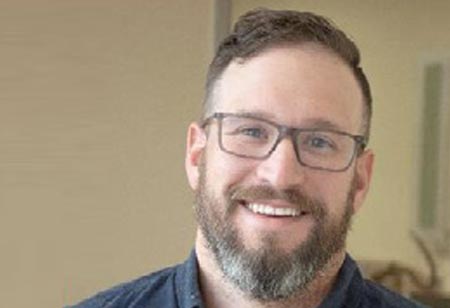
Scott Arendt
Since my introduction into the mining world in the early 2000s, the importance of EHS performance has evolved from somewhat of an afterthought to a key indicator of the success for mines, mining companies, contractors and suppliers across the industry. I have been fortunate to have had talented and dedicated mentors who guided me onto a career path I never truly planned. One quality they all shared was a genuine care for people - something that stuck with me and became a driving force behind how I approach EHS in every role I have had.
I learned that the more I wore out my boot leather by getting into the field and engaging with personnel, the more success we achieved.
After working for a large mining company until 2019, I transitioned into the contracting world and never looked back. My work has taken me to various industries including public projects, oil and gas, food and beverage, drilling, industrial construction and back to mining. The wide range of safety cultures I experienced cemented the most critical lesson: the most meaningful impact I can have on any level, whether on a company-wide scale or with individual employees, comes from getting employees to recognize and discuss the hazards they experience in their work scopes.
I believe this is the biggest bang for the buck in both incident prevention and culture development. While most, if not all, companies require a Job Hazards Analysis (JHA) Job Safety Analysis (JSA) or Team Risk Assessment (TRA) prior to beginning work, I have found that one-on-one interaction is more fruitful. Too often, these forms become a checkbox exercise; supervisors list job steps and associated hazards and controls without engaging in accurate hazard recognition. So, how can we, as management and leaders, make a quick and meaningful impact?
“The most meaningful impact one can have on any level, whether on a company-wide scale or with individual employees, comes from getting employees to recognize and discuss the hazards they experience.”
Consider for a moment a “normal” interaction between an employee and an EHS professional or a member of management. This often includes some measure of a compliance check, PPE assurance and general discussion regarding the day’s task. Mentally, the EHS professional or manager is checking boxes in their head.
• The employee is trained for the task. Check.
• The employee is properly wearing the appropriate PPE. Check.
• The employee is fit for duty. Check.
• The crew completed a risk assessment. Check. What is missing from this interaction?
When speaking with employees, I aim to accomplish two things:
First, I want them to know I genuinely care about them going home safely and healthy to their families. Second, I want them to discuss the hazards they will encounter in their work areas and tasks.
How you do this depends on your leadership style and relationship with the employee. My go-to method is casually asking them, “Tell me - what could hurt you today?” Another one I often use is “If the worst were to happen, what does that look like?” Simply asking the question prompts the employee to consider the hazards and the potential outcomes. Once the risks are identified, the employee can usually describe the controls needed to stay safe, perhaps with a little prompt and guidance.
That’s it. You win. WE win.
What you accomplished is far more significant than a single interaction would indicate. You’ve shown your employee that you care about their safety and facilitated a hazard recognition exercise! And the cherry on top…. They came up with it, giving them ownership of the mitigations and showing their ability to make safety decisions.
No matter the maturity level of your current safety culture, whether compliance-driven or behavior-based, I believe the most impactful thing you can do is engage employees in meaningful discussions about the hazards they face.
