
THANK YOU FOR SUBSCRIBING
Aluminum Recycling and Smelting: A Catalyst for Sustainable Industrial Practices
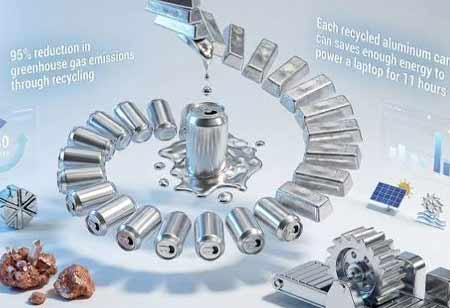
Aluminum recycling and smelting companies play a critical role in supporting sustainable industrial growth by transforming scrap metal into high-quality, reusable materials. As industries increasingly emphasize resource efficiency and environmental stewardship, companies are adopting cost-effective production methods for their primary aluminum manufacturing. Through advanced processing technologies and integrated operations, they ensure consistent material supply, improved product quality, and enhanced operational efficiency, making them essential contributors to modern manufacturing and circular economy practices.
Choosing Consistency over Commodity

Aluminum recycling and smelting remain a commodity-driven space where differentiation is often compressed into price and volume. Buyers operating in metals and mining face a persistent challenge: securing supply that performs predictably under fluctuating demand while maintaining quality, compliance and delivery discipline. Commodity equivalence masks meaningful variation in execution, and that variation often determines downstream cost, production continuity and risk exposure. Procurement decisions that rely solely on price comparisons often underestimate the hidden costs of inconsistency.
Spent Catalyst Recycling Advancing Sustainable Industrial Resource Recovery
Spent catalyst recycling has become an essential component of modern industrial sustainability and resource management strategies. Across refining, petrochemical, chemical, and manufacturing industries, catalysts are indispensable for accelerating chemical reactions and improving process efficiency.
Over time, however, catalysts lose their activity due to contamination, metal deposition, or structural degradation. As industries face rising raw material costs, stricter environmental regulations, and greater supply chain volatility, recycling spent catalysts offers both economic and ecological benefits. By recovering and reusing valuable metals, industries can significantly reduce waste while conserving finite natural resources.
Setting the Standard in Spent Catalyst Recycling

Environmental regulation and refinery modernization have transformed the economics of spent catalyst management. Refiners now operate under tightening sulfur regulations, stricter cross-border waste controls and rising expectations from investors regarding emissions reporting. Spent catalysts, once viewed largely as hazardous residues requiring disposal, are increasingly treated as strategic secondary resources. The shift has reshaped how executives responsible for acquiring spent catalyst recycling solutions evaluate partners.
The Economics of Helium Exploration from Discovery to Commercial Production
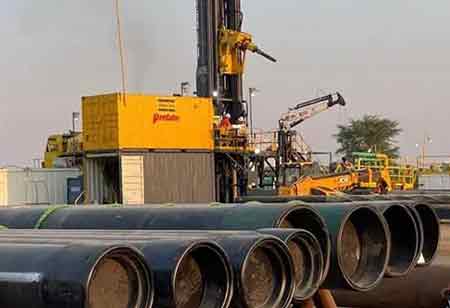
The transition of helium from a geological curiosity to a commercially valuable gas presents a unique economic profile. Helium is characterized as a high-value, scarce, non-renewable commodity with concentrated sources and diverse high-technology applications. The economic viability of helium production is influenced by four interrelated factors: the quality and concentration of the resource, its proximity to existing gas infrastructure, the costs associated with processing and purification, and the prevailing market prices.
Advancing Domestic Critical Metals through Separation Innovation

The race to secure critical minerals has moved from policy debate to boardroom priority. Semiconductor manufacturing, energy infrastructure and advanced defense systems depend on elements that are often mined or refined outside the U.S. Refining capacity remains concentrated overseas, where environmental and labor standards differ from those imposed on domestic producers. For executives responsible for metals supply, the constraint is not geological scarcity but processing capability and economic viability.
Operational Dynamics in the Critical Metals Sector: Challenges and Opportunities
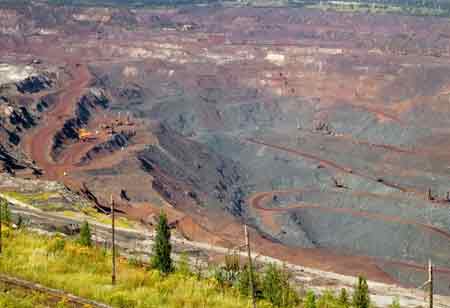
Pressure on global supply chains has heightened the role of specialized providers in extracting and refining critical metals, crucial for energy systems, electronics, and high-performance manufacturing. Companies offering separation technologies are becoming strategic players in resource security and sustainable supply discussions. Investment trends indicate an increased focus on midstream metal production stages, where converting complex minerals into viable materials is crucial.
Disciplined Exploration in the Critical Minerals Economy

Volatility in the critical minerals market has shifted exploration from speculative land grabs to disciplined technical assessment. Executives allocating capital to lithium, rare earth elements and byproduct metals face pressure to justify drilling budgets, validate unconventional resources and translate subsurface data into credible economic narratives. Government incentives and strategic supply chain initiatives have increased attention, yet many early-stage prospects stall when geological interpretation, geochemical data and spatial modeling remain fragmented across vendors.
Securing Tomorrow's Resources: Strategic Advances in Mineral Exploration
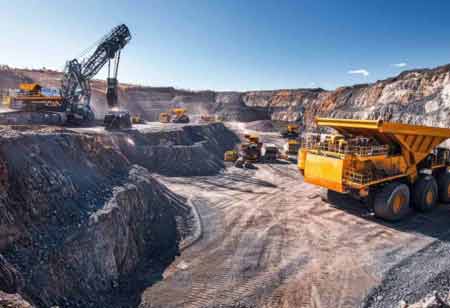
Mineral security has emerged as a strategic priority as advanced manufacturing, clean energy, and digital infrastructure reshape industrial demand. Within the context, exploration firms are navigating growing pressure to secure reliable access to critical minerals while addressing environmental, social, and economic expectations. These companies are no longer assessed solely on their ability to locate new deposits. Instead, they are evaluated on how effectively they convert discoveries into viable, responsibly developed assets that strengthen longterm supply resilience and economic stability.
Selecting A Trusted Gold And Silver Dealer In A Changing Metals Market

Price volatility, geopolitical tension and inflation concerns continue to drive executive interest in physical gold and silver. For organizations allocating capital to precious metals or divesting estate holdings, the question is no longer whether to participate, but how to do so through a dealer that safeguards value and reputation. The gold and silver trade attracts a wide range of participants, from small local buyers to large national platforms, yet standards of authentication, transparency and client care vary widely. Sound decision-making depends on identifying a firm that combines technical rigor with disciplined transaction practices.
Precious Metals Market: Understanding the Dealer's Role in Wealth Management

Gold and silver dealers play an indispensable role in the global precious metals industry, serving as the bridge between producers, investors, institutions, and end consumers. In the contemporary financial environment marked by inflationary pressures, geopolitical uncertainty, and volatile equity markets, these metals continue to attract strong demand.
Integrated Models and the Future of Helium Supply

Helium has evolved into a strategic industrial input underpinning semiconductor fabrication, advanced computing, aerospace engineering and medical diagnostics. Periodic shortages and export constraints have exposed how vulnerable supply chains can be when they depend on isolated fields or single-commodity exploration plays. Executives tasked with securing dependable helium volumes now confront a structural question: what kind of production model best supports long-term contracts, pricing stability and delivery assurance?
The Role of Precious Metal Dealers in Enhancing Trust, Liquidity, and Market Access

For centuries, acquiring gold, silver, and platinum required in-person visits, manual verification, and private storage. The precious metals industry is adopting a digital-first approach, driven by mobile accessibility, advanced fintech integration, and the transparency of blockchain-based asset tokenization. Modern precious metal dealerships are evolving into comprehensive digital wealth management hubs. This shift combines the stability of physical bullion with the speed and convenience of the stock market.
Discipline and Liquidity in Physical Precious Metals

For financial services executives evaluating partners in physical precious metals, the decision hinges less on price discovery than on confidence in execution. Gold and silver function as balance-sheet instruments, crisis hedges and discreet stores of value. When markets tighten or volatility accelerates, the ability to transact without interruption becomes the definitive test of a dealer’s credibility. The sector remains fragmented, populated by firms that can operate smoothly in stable conditions yet retreat when volumes surge or settlement windows compress. That gap exposes buyers to delays, partial fills or forced timing decisions that undermine the very rationale for holding physical metal.
Environmental Performance and Circular Strategies in Rare Earth Magnet Value Chains

Rare earth magnets (REMs) have become essential to the decarbonized economy. These high-performance materials, mainly Neodymium-Iron-Boron and Samarium-Cobalt, are critical for the high-torque, high-efficiency motors used in electric vehicles, offshore wind turbines, and the growing humanoid robotics sector. Producing these magnets requires a complex, resource-intensive chemical process. Meeting rising demand while ensuring responsible mining requires a thorough understanding of the environmental impact at each stage of the value chain, from extraction to final sintering.

