

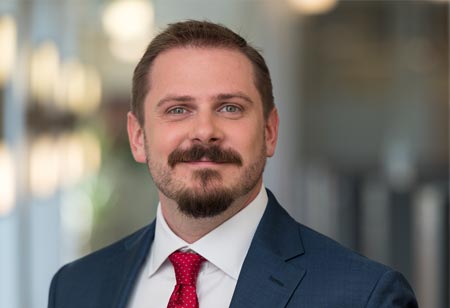
Erik Jones
Many of today’s technologies did not exist or were in their infancy when I began my career over two decades ago. Today, we are deploying automation, increasingly sophisticated mine control systems and advanced analytics, while looking toward large-scale adoption of electrification and artificial intelligence. Technology has changed enormously. What I find more interesting is how little the fundamentals of successful mining have changed.
It still boils down to core fundamentals of safety, people, operational understanding, clear accountability, good decisions, and continuous improvement. The challenge is in applying technology in ways that improve those fundamentals and enable different decisions that meaningfully impact how we operate. Successful technology transformation isn’t fundamentally a technology problem; it’s a leadership and operational challenge. Technology can do almost anything, but our operations cannot absorb unlimited change.
I reach back to the middle of my career and the adoption of remote, semi-autonomous LHD operations. The rationale for adoption was underpinned with an ingrained mining principle; everyone goes home safe. The system was expensive, complex and required atypical support. Like many adopters at the time, safety was seen as the prime and perhaps only reason to pursue the technology.
Once the safety improvement became ingrained, the technology was inevitably questioned for its expense and complexity. That forced us to challenge another deeply engrained mining mentality: how can we do more with the same? Technology had solved the problem we originally asked it to solve, now we had to understand what else it could enable.
Operationally, the answer was continuous use. Rather than limiting remote operation to circumstances driven directly by the safety considerations or regulatory requirements, we began looking at it as a distinct operating advantage. Hot-seating and maximizing runtime, coupled with the autonomous functionality of multi-machine operation, changed how we measured performance. It was no longer simply about instantaneous tonnes per hour; it was about how many tonnes we could move by utilizing more of the available hours in a shift and enabling a single operator to run more than one machine simultaneously. Once we realized this, it was no longer a matter of trading production for safety, they had become interlinked and mutually beneficial.
That automation adoption experience shaped my approach to technology. The best technologies do not simply optimize one outcome at the expense of another; they change the operating model itself. They are the force multiplier for opportunities that may never have existed without their adoption. Success comes from starting with the operating problem, understanding what success looks like and remaining open to the possibility that the greatest value may come from somewhere you did not initially expect.
Technology leadership requires managing the increasing complexity of the operating environment. People have finite attention, and operations therefore have finite capacity for change. Operators shouldn’t need five interfaces to perform a single job, nor can maintenance teams instantly develop new competencies because a new system arrives.
As automation, electrification and Artificial Intelligence continue to develop, preparing an operation for the future is less about preparing for a specific technology and more about creating an organization capable of adopting change. This requires alignment across all facets of the business, internal and external, to partner around the operating problem being solved. The strongest roadmaps are not built around products or systems but defining the ideal operational outcome and then selecting technology to support them.
Looking back, implementation was the beginning rather than the end of what the system could do. Our original application solved the problem we set out to address, but the greater value emerged as we challenged our assumptions. Continuous improvement requires the same mentality to implement, learn, adapt and then earn the right to ask more from technology.
Now decades into my career, I am more excited about the potential of mining technology than I have ever been. There is always something new and more impactful being developed to solve yet another challenge in this industry. Our responsibility as leaders is not to pursue technology simply because it is possible, but to remain focused on the fundamentals by keeping our people safe, understanding the operations, creating clear accountability, making better decisions and continuously improving in the way we work. Technology will continue to change, the fundamentals won’t.
