


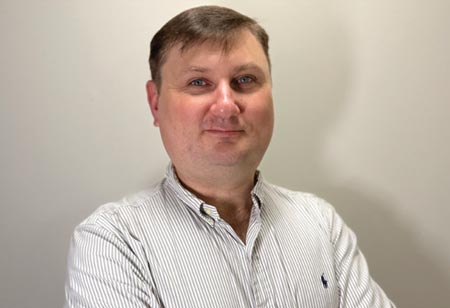
Andrew Denysiuk
The ferrochrome industry is at an important crossroads. Demand for chromium alloys continues to grow across sectors where strength and corrosion resistance matter most, including defense, aerospace, marine, and energy. The U.S. Department of Defense has classified chromium and its alloys as strategic materials for the U.S. military. Yet conventional ferroalloy production remains highly energy intensive and traditionally dependent on carbon-based reduction. The challenge, therefore, is not simply to produce ferrochrome more efficiently, but to rethink how low-carbon ferrochrome is produced in the first place.
Conventional ferrochrome production relies heavily on carbon as both a reductant and an energy source. This creates a substantial energy requirement and a significant carbon footprint. Low-carbon ferrochrome presents a particular challenge because carbon must be minimized while maintaining the required metallurgical quality and chromium recovery. The alternative is to change the funadamental reduction mechanism.
The MM Metals USA process utilizes an aluminothermic reaction supported by a closed electric DC plasma arc furnace. It is a patented process recognized in 150 countries. Aluminum acts as the chemical reductant, while electrical energy provides a highly controlled thermal environment for continuous production. This approach separates the metallurgical reduction mechanism from the conventional carbonintensive furnace model, creating an opportunity to fundamentally change the energy and emissions profile of the process.
I first became involved with the concept after meeting Daniel Shaw in South Africa in 2023. At the time, I was working as an engineering manager at an established ferroalloy producer. Daniel had been developing the concept of continuous low-carbon ferrochrome production using aluminothermic reduction and plasma arc furnace technology since 2012 and had a clear vision of what could be achieved by fundamentally changing the reduction process. The idea resonated with my own engineering philosophy. I recognized its potential and became part of the effort to transform the vision into a new industrial process. Since then, development has brought together a multidisciplinary team with experience across the ferroalloy industry and related technologies.
At the heart of the process is an 8 MW DC plasma arc furnace designed for continuous operation. Controlled direct-current electrical power and the aluminothermic reaction work together to create a fundamentally different process from conventional submerged-arc ferrochrome production.
Early operating figures indicate an energy requirement of approximately 0.7 kWh per pound of ferrochrome, equivalent to approximately 1.54 MWh per ton. Compared with conventional ferrochrome production figures of approximately 4 MWh per ton cited in the development work, this represents a substantial reduction in electrical energy consumption, with further potential for optimization as the technology matures.
More importantly, aluminum replaces carbon as the principal chemical reductant. This provides a pathway toward producing premium low-carbon and ultra-low-carbon ferrochrome while substantially reducing the role of carbon in the metallurgical process. It also opens the door to significantly lower carbon emissions. The environmental performance of the overall operation will, of course, depend on factors such as the source of electricity, raw materials, and upstream manufacturing. Nevertheless, replacing carbon-based reduction with an aluminothermic route represents a significant technological step toward “greener” ferrochrome production.
The significance of DC plasma and aluminothermic technology may ultimately extend beyond ferrochrome. The underlying principles can be applied to other ferroalloys, such as ferrovanadium and ferronickel, where conventional carbon-intensive production presents environmental and economic challenges.
Leadership through Experience and Purpose
After more than 15 years of working in the steel and ferrochrome industry, I have learned that meaningful technological progress rarely begins with having all the answers. Throughout my engineering career, I have come to believe that leadership in engineering is about creating the conditions in which people can find the answers together.
A new process requires expertise across metallurgy, electrical engineering, refractory technology, mechanical engineering, automation, process control, and plant operations. Bringing these disciplines together creates something greater than the sum of their individual capabilities.
For those leading such projects, the responsibility goes beyond achieving today’s production target. It is about developing people who can solve tomorrow’s problems. When developing something genuinely new, there is no established textbook, operating manual, or experienced specialist who can provide every solution. The team becomes the source of knowledge. Mistakes become data. Difficulties become opportunities to improve. Experience is built one engineering decision at a time. This is where experience and purpose become powerful together. Experience tells us what has worked before and, equally importantly, what has not. Purpose provides the motivation to go beyond established boundaries.
That, to me, is inspiring leadership through experience and purpose: using what we have learned to challenge what exists, giving people a reason to pursue something better, and having the determination to build the knowledge required to make that vision real.
There is a particular satisfaction in becoming an expert in a field that previously had no established expertise.
