

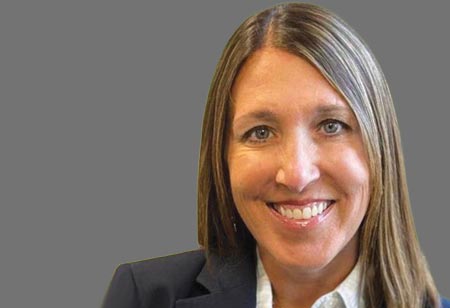
Amber (Wheatley) Bonacci
Amber Bonacci is a steel industry professional with expertise in metallurgy, manufacturing, sales and technical services. She is actively involved in industry networking and leadership initiatives, including the Association of Women in the Metal Industries.
Evaluate the Experience, Not Just the Position
Career development is often viewed as a progression from one position to the next, with advancement measured by increasing responsibility, title or the size of the team you lead. But some of the most important periods of professional growth may not look like advancement at all.
Throughout my career, I have worked across quality, operations, technical services and sales. Those experiences have taught me to think differently about career development. Rather than focusing only on the next position, consider the experiences and capabilities you need to become a stronger leader over the long term.
Early in my career, I was fortunate to have a mentor who encouraged me to think beyond my current role and consider what I would need for the future. That guidance changed the questions I ask when evaluating an opportunity: What will I learn that I don't know today? What capabilities will I gain? How could this experience prepare me for future roles?
A lateral position or a move into an unfamiliar function may provide development that a traditional promotion cannot. Moving from quality into production allowed me to broaden my operational experience. Later, moving into technical services and eventually sales exposed me to entirely different areas of the business.
Leadership Growth Does not Always Require Leading a Team
Perhaps the most significant period of leadership development in my career occurred when I wasn't formally leading anyone.
Before moving into sales, most of my roles included responsibility for others, with team sizes ranging from 3 to over 60. In those positions, much of my attention was focused on developing my team—coaching, providing feedback, creating opportunities and helping people prepare for what came next.
"Learning to adjust to the audience and situation is an important part of becoming a more versatile leader."
As an individual contributor in sales, I had the space to turn some of that attention toward my own development. I could more intentionally assess my strengths, identify where I needed to grow and work on those areas before returning to a formal leadership position. Looking back, I consider that period one of the most influential in shaping the leader I am today.
Be Willing to Stretch beyond What You Know
Moving into sales pushed me outside my comfort zone in ways I hadn't anticipated. The biggest shift from a technical, operational role into sales is not just learning negotiations and forecasting—it’s moving from a world where there is often a technically supportable answer to one where success depends much more on influence, ambiguity, relationships, competing priorities and commercial judgment.
Over time, I learned to recognize different indicators of success, including the strength of customer relationships and the ability to work toward outcomes that created value for both organizations. More importantly, I became more comfortable working in an environment where the answers and measures of success were not immediate.
Being outside your comfort zone is not necessarily a sign that an opportunity is the wrong fit. Sometimes, it's an indication that the opportunity has something important to teach you.
Lead Without Losing Yourself
Working across different functions taught me that effective leadership can look different depending on the environment. Communicating with a production team on the mill floor requires a different approach than communicating with customers or senior executives. Learning to adjust to the audience and situation is an important part of becoming a more versatile leader.
But adapting doesn't mean changing who you are. As a woman building a career in a traditionally male-dominated industry, that distinction took time for me to understand. Earlier in my career, I received feedback that led me to question whether empathy had a place in my leadership approach. With experience, I came to recognize that empathy was not something I needed to leave behind; it was a strength that I should lead with.
The goal is not to lead the same way in every environment. It's to learn how to adapt to what the situation requires without losing the qualities that make you an effective leader.
Take an Active Role in Your Development
Career development requires periodically looking beyond the job you have today. Take stock of your strengths and gaps. Seek feedback and build relationships with mentors and people whose perspectives you trust. Engage in industry associations and build a network that exposes you to different experiences and points of view. And when an opportunity arises, consider not only whether it moves you forward, but also what it allows you to learn.
Careers do not have to follow a straight line to move forward, and leadership development does not always happen while you are leading.
Sometimes the experience that takes you outside your expected path is exactly the one that prepares you for what comes next.
