

THANK YOU FOR SUBSCRIBING
Metals And Mining Review: Specials Magazine
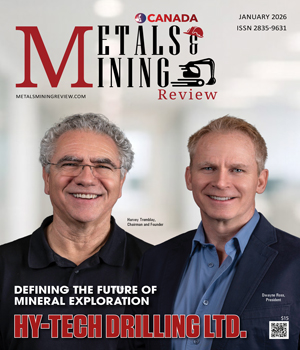
A thin mist clings to jagged mountain peaks as glaciers creak under shifting ice. Frozen lakes stretch into the horizon, untouched by roads or tracks. Most people would avoid these places, but they’re exactly where Hy-Tech Drilling Ltd. feels most at home. Operating in some of the harshest and most unpredictable terrains on Earth, Hy-Tech Drilling Ltd. has built its reputation on delivering precise, efficient, and environmentally considered drilling services in conditions that test the limits of both people and machines. Founded on practicality and adaptation, the company approaches obstacles as opportunities to rethink what’s possible, combining technical mastery with a culture rooted in problem-solving, partnership, and respect. “Innovation was never just a buzzword for us; it started because we had to find a way,” says president Dwayne Ross. “Our clients face unique geological puzzles; our role is to create the tools and methods that solve them.” Innovation Born from Necessity Hy-Tech’s story of innovation is grounded in functional ingenuity, driven more by field demands than by industry trends. Among its defining achievements is the evolution of its fly drill, a lightweight yet powerful system initially designed for 1,000-foot depths. Through years of engineering refinement and real-world feedback, that system now regularly drills beyond 8,000 feet (about 2.5 kilometers), while remaining light enough to be transported by helicopter. This shift opened new frontiers for exploration. It enabled clients to access remote deposits that were once considered impractical, extending drilling seasons and reducing operational risk. What started as a pursuit of efficiency ultimately set a benchmark for depth and reliability in airborne drilling systems. Equally noteworthy is the company’s ability to adjust the same equipment for vastly different environments. A fly drill that once worked alpine slopes can be transformed into a lightweight skid drill capable of operating safely on frozen lakes in northern Saskatchewan. This versatility allows operations to begin earlier and continue longer in seasons defined by narrow weather windows....Read more
Metal Recycling
The surplus of used drill and production material in the oil patch industry presents a confluence of opportunities and challenges. Reselling large volumes of used drill stem tubing and rods opens new revenue streams and is an ideal avenue for recuperating some of the sunk costs. But the act demands in-house proficiency and puts a strain on daily operations—a difficult trade-off in an industry where operational efficiency takes precedence. Drill Stem Recycle (DSR), one of the pioneers in repurposing oil patch pipes and sucker rods, is on track to relieve the oil patch of this burden. The company caters to both ends of the spectrum— the oil patch industry and buyers. It ensures fair prices for materials and, alternatively, serves as a one-stop shop selling repurposed pipes for clients such as the construction industry and livestock handling facilities. This dual focus gives the company a thorough grasp of the market’s pain points and opportunities both evident and dormant. Bridging Supply and Demand The oil patch typically relies on internal staff to handle surplus stock, but due to limited sales experience, they mostly make small-scale and one-time sales. This strategy inadvertently results in a supply shortage in the market despite surplus stock in many vendors’ inventories. A challenge DSR effectively addresses. ...Read more
Mining Services

Mining operations generate vast amounts of solid and liquid waste. Traditionally, companies have relied on centuries-old practices like lime treatment to address acidic wastewater, producing substantial sludge and hazardous solid waste. While lime is inexpensive and readily available, it not only creates serious concerns that can potentially harm local communities and the surroundings in general but also limits the possibility of recovering valuable metals from mine wastewater. Mitigating these liabilities associated with conventional methods requires an innovative approach to preserving, protecting, and promoting healthy ecosystems. PMAP, an eco-innovative company, cracks the code for these deeply sedimented problems, offering a safer, more efficient, and cost-effective alternative for treating mine wastewater. Built upon the founder’s extensive industry experience and knowledge, PMAP’s patented solution reduces sludge generation and creates value for the mines instead of relying on batch verification practices. Its core technology is based on a new chemical formulation and an intelligent dispensing system for precise reagent distribution. “We have formulated a novel green reagent that effectively neutralizes harmful contaminations,” says Mohsen Barkh, founder and senior process engineer. “Our patented formula ensures optimal pH balance while preventing the overuse of neutralization reagents.” ...Read more
CXO INSIGHTS

Maximizing Your Mine's Performance with Technical Lubricant Expertise
Sharon Perichak, Global Segment Marketing Manager - Mining, Agriculture & Industrial Greases, HF Sinclair [NYSE: DINO]
Navigating Economic and Sustainability Goals in Mining
Sophie Bertrand, Senior Director of Sustainability, New Gold Inc [NYSE: NGD]

Identifying the Value in Automating the Drill Floor
Jeremy Angelle, VP of Well Construction, Expro

Transforming the Green Tech Industry with Low Carbon Energy
M. Douglas Dagan, Senior Vice President - Renewable Energy, Suburban Propane

Compensated Fuels: Enabling Energy Transition w/o Breaking the Bank. The Role of Compensated Fuels in a Balanced Energy Transition
Jonathan (J.W.) Hackett, Senior Director, Environmental Products, Global Partners LP

The Talent Mandate: Investing in People for Unstoppable Organizational Prosperity
Angela Vanikiotis, Director of Talent Management, Royal Canadian Mint

Should We Be Worried? Refining of Renewable Feedstocks at a Time of Disruptive Change
Bruce Fleming, CEO Montana Renewables, Calumet

IN FOCUS
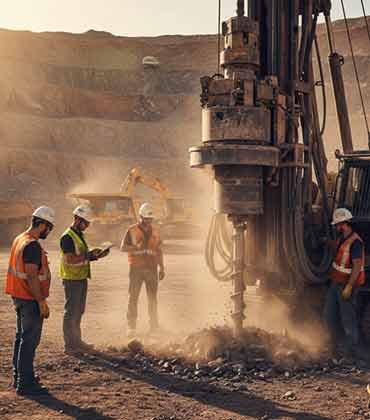
The Future of Geotechnical Drilling in Canada
Canada's mining sector evolves with the demand for critical minerals, integrating advanced geotechnical drilling and real-time data to enhance stability, safety, and regulatory compliance in complex geological environments.
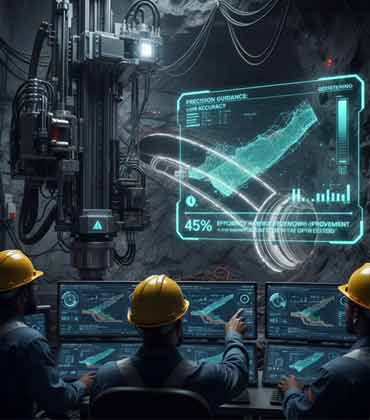
Precision Directional Drilling and the Future of Deep-Deposit Mining in Canada
Canadian mining shifts to deep, precision directional drilling, using real-time data and AI to boost ore recovery, efficiency, and environmental protection in challenging Shield and Arctic regions.
EDITORIAL
Strengthening Canada’s Mining Operations with Precision Drilling
Canada’s mining industry is changing rapidly. High demand for minerals has placed mining companies under pressure to complete projects with more accuracy and predictability. As projects move into more complex geological settings and face heightened scrutiny around timelines and capital deployment, the industry’s focus is shifting toward disciplined execution across every stage of the mining lifecycle.
Drilling services have emerged as a critical enabler of informed decision-making and project certainty. Providing accurate subsurface data helps mining companies reduce geological uncertainty early in the project cycle. These services support active mining operations through production and grade-control drilling. Well-executed programs influence blast efficiency, material handling and overall site productivity.
Service providers that combine technical expertise with strong safety and performance standards help operators maintain consistency while adapting to site-specific challenges. To deliver this, drilling service companies are investing in advanced equipment, data-driven practices and improved operational controls. These developments are elevating drilling from a supporting function to a strategic component of mining performance.
In this edition of the Metals and Mining Review Canada, we explore the latest advancements in drilling service providers and how they are strengthening Canada’s mining ecosystem.
We have also curated thought leadership articles from industry experts, including Jeremy Jonathan (J.W.) Hackett, Senior Director of Environmental Products at Global Partners LP, Sharon Perichak, Global Segment Marketing Manager for Mining, Agriculture & Industrial Greases at HF Sinclair and Frode Jensen, President of Rig Technologies at National Oilwell Varco.
We hope this edition of the Metals and Mining Review Canada helps you find the right partner for your business requirements.
