

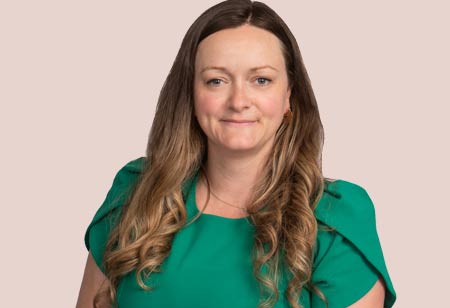
Sophie Bertrand
Sophie Bertrand, Senior Director of Sustainability at New Gold, grew up immersed in the mining industry. Her career began after university with a focus on environmental and social impact assessments for mining projects, leading to eight years in environmental consulting, primarily at the development stage. Seeking a more direct role in responsible mining operations, she pursued an MBA in Global Mining Management at the Schulich School of Business, York University.
Following her MBA, she joined Yamana Gold Inc., marking her first role within a mining company. There, she gained invaluable experience, honing both technical expertise and leadership skills that continue to shape her approach today.
At New Gold, she leads the company’s sustainability initiatives, overseeing strategy, supporting site teams, managing environmental and social risks and ensuring transparent ESG reporting.
Given your experience, what do you consider the key sustainability challenges in the Canadian mining industry, and how have you addressed them?
I believe one of the biggest sustainability challenges, not just in Canada but globally, is obtaining and maintaining a social license to operate. It’s a challenge because people and relationships are complex, and communities are diverse—what builds trust in one may not apply to another. There’s no cookie-cutter approach. Despite our best efforts, maintaining this social license is a moving target. To overcome this, it's crucial to focus on building trust-based relationships by being transparent, authentic and genuinely invested in the community.
How do you balance economic goals with sustainability objectives in your role?
To create long-term value for the company, it’s crucial to set smart sustainability goals. Some sustainability projects deliver clear financial benefits, while others may be more intangible but still offer significant long-term value. It’s important for senior leadership to understand this longer-term perspective and continue challenging sustainability professionals to align with the company’s broader goals, including economic objectives.
“Success in mining isn't just about logic and science, but also about understanding and addressing how people feel.”
In 2024, we refreshed our sustainability strategy with new goals, ensuring that the process was inclusive. We involved not only sustainability professionals but also general managers and senior leadership to bring an economic and operational lens to sustainability. This approach proved to be very successful.
Can you describe a pivotal moment or project in your career that shaped your perspective on sustainability?
My perspective on sustainability continues to evolve, influenced by changing technology, external stakeholders and shifting values of newer generations. There's a constant need to learn and adapt.
However, one experience that greatly shaped my perspective on sustainability in mining was a project I worked on in Central Europe. There, I witnessed how political perceptions could shape the influence of NGOs, often surpassing the opinions of local communities. This realization reinforced the idea that, regardless of the underlying facts, perceptions are seen as truth by stakeholders and can derail even the most well-planned projects. It reminded me that success in mining isn't just about logic and science, but equally about understanding and addressing how people feel.
Could you describe your leadership style and how you apply it to drive sustainability initiatives in the resource-intensive mining industry?
My leadership style is deeply influenced by the people I've worked with over the years. I consider myself a collaborative leader, as I truly believe that input from others and working together leads to better outcomes. I value hearing ideas I may not have considered and drawing inspiration from others. I strive to be inclusive, working across departments, connecting sites, and contributing to projects outside my immediate expertise where I can add value. While I’m not afraid to roll up my sleeves and get hands-on, my primary role is to support our sites.
How do you envision the next few years in sustainability, and which emerging trends do you believe will have the greatest impact on the mining industry?
I think we're starting to see a shift from climate conversations to a greater focus on nature and biodiversity, though climate discussions won't disappear. As technologies evolve, reducing energy consumption and finding more energy-efficient processes will make increasing financial sense. Decisions must therefore be made from a greenhouse gas reduction reduction perspective, with economic and financial considerations in mind.
Another rapidly changing area is the reporting landscape. New standards, like new Canadian Sustainability Disclosure Standards (CSDS), are emerging in Canada. While currently voluntary, they could become mandatory. This poses a significant burden on companies, especially smaller ones, which may struggle to meet the same reporting requirements as larger organizations. While I support transparent disclosure, the process should not be so complex or resource-intensive that it requires large teams or external consultants.
Lastly, Indigenous sovereignty, particularly in Canada, is a key factor that will shape our operations. This will require us to think differently and ensure Indigenous communities are true partners in our projects. The approach may vary regionally, but it will necessitate a fundamental shift in our mindset and operations.
Could you share some advice for your peers and emerging professionals in the industry on how they can succeed and the strategies they should focus on?
It's crucial to create or find an environment where you feel happy and supported—one that fosters collaboration, learning and growth. Don’t be afraid to admit when you don’t know something, as long as you’re open to learning. Stepping out of your comfort zone is key for personal and professional growth; I’ve seen this firsthand, both in myself and others. Surround yourself with trusted allies who will cheer you on, help solve challenges, and lend a listening ear. And remember, giving back, whether through mentoring or supporting others' growth, is vital.
