

THANK YOU FOR SUBSCRIBING
Metals And Mining Review: Specials Magazine
![Coeur Mining, Inc. [NYSE: CDE]: Sustaining Output through Discipline, Technology and Asset Balance](https://www.metalsminingreview.com/uploaded_images/40-nauyd.jpg "Coeur Mining, Inc. [NYSE: CDE]: Sustaining Output through Discipline, Technology and Asset Balance")
Coeur Mining, Inc. [NYSE: CDE]
Sustaining Output through Discipline, Technology and Asset Balance
Silver and gold mining requires consistent production across varied geological conditions, where even minor deviations in extraction or processing can affect output and recovery. Coeur Mining approaches this challenge through disciplined execution and technology-enabled extraction that support stable performance. Its framework emphasizes controlled processes that maintain reliability across sites while adapting to changing ore characteristics. The company’s production model is built around a diversified portfolio of assets located across North America. Each site contributes to overall output while operating under tailored strategies suited to its geological profile. This structure allows Coeur Mining to balance variability between operations and sustain consistent production levels over time. Integrating Technology into Extraction Processes Coeur Mining incorporates data-driven tools into extraction workflows to improve precision at each stage of mining. Drilling and blasting activities are guided by geological modeling that defines ore boundaries with greater clarity. This structured approach enables teams to extract material more efficiently while minimizing dilution. Processing plants are configured to adjust to varying ore compositions, ensuring that recovery rates remain stable despite geological differences. Milling and flotation systems are calibrated based on feed characteristics, allowing the company to maintain output quality across multiple sites. These adjustments ensure that production targets are met without compromising efficiency. Real-time monitoring systems provide visibility into extraction and processing performance. Teams can track throughput, recovery rates, and equipment conditions, enabling timely adjustments when deviations occur. This continuous feedback loop strengthens consistency and reduces disruptions across mining operations....Read more
![Coeur Mining, INC [NYSE: CDE]: Sustaining Output Through Discipline, Technology, And Asset Balance](https://www.metalsminingreview.com/newstransfer/upload/2-tcf9-.jpg "Coeur Mining, INC [NYSE: CDE]: Sustaining Output Through Discipline, Technology, And Asset Balance")
Precious and Critical Metals
PTOE
Reclaiming the Mineral Sovereignty
James O’Connor, CEO, Lauren Rose, Strategic / Communications Lead
The U.S. can extract resources and manufacture at scale. The vulnerability, however, lies in what happens in between. Across the country, vast inventories of tailings, coal ash, and industrial residues contain critical metals long considered economically unfeasible to process domestically. As demand rises for semiconductor inputs, battery materials, and specialty metals, the U.S. faces a structural gap: upstream resources and downstream manufacturing remain strong, but most midstream processing capacity has moved overseas. In critical minerals, control over processing increasingly determines who captures margin, market access, and strategic advantage. For PTOE CEO James O’Connor, this is not a resource problem but a processing one. “We see the concentration and separation phase, the mid-stream, as the bottleneck in domestic critical mineral supply chains,” he says. “That’s where enormous value stalls, especially with low-PPM metals in high-volume material streams.” ...Read more

Mineral Exploration and Mining
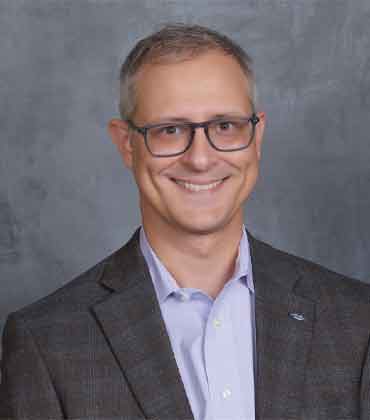
What problem does modern critical minerals exploration data create for early-stage teams? In the race to secure critical minerals, exploration teams are collecting more data than ever but extracting less clarity from it. Keystone Geoscience was founded to help bridge that gap by combining microscopic rock analysis, elemental geochemistry and geospatial interpretation within a single consulting workflow. This approach helps early-stage teams evaluate mineral potential more efficiently and move from samples to informed decisions with less coordination overhead. How did Aaron Ball’s background and observations lead to Keystone Geoscience’s founding? That integrated approach reflects how the company began. Keystone Geoscience was founded by Aaron Ball, a first-generation college graduate, trained geologist and armed services veteran whose career started in the oil and gas industry. While working on subsurface projects, Ball repeatedly observed lithium appearing in produced water tests across multiple assignments. At the same time, battery technology was advancing and the strategic importance of critical minerals was becoming clearer. Long before the topic became widely discussed, Ball recognized that operators might already hold underexamined data with potential commercial implications. “When the pandemic disrupted the oil and gas sector, I turned that insight into action and launched Keystone Geoscience to focus on lithium brines and other critical minerals. We help companies understand not just what elements are present but why they matter and how they can be evaluated realistically,” says Ball. From the outset, the company focused on a practical industry gap. Exploration workflows often involve multiple separate steps, including laboratory geochemistry, petrographic review and later geospatial interpretation. As a single-consultant firm, Keystone Geoscience integrates petrographic analysis, laser-induced breakdown spectroscopy and geographic information systems into one coordinated workflow, reducing the need for clients to manage multiple handoffs while keeping interpretation connected from texture to chemistry to location. How does the integrated workflow turn samples into a unified GIS-backed interpretation? In practice, this means clients can engage Keystone Geoscience for a continuous interpretive process rather than coordinating separate specialists. Rock samples can be analyzed for elemental composition, examined microscopically to understand geological processes and placed into spatial context within a GIS database, producing a unified interpretation aligned with the client’s exploration objectives. ...Read more
Aluminum and Steel
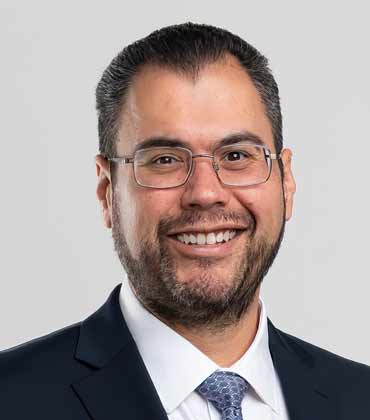
Unearthing a Culture of Respect: Forging a Lean and Agile Future in Metals and Mining with Scrum
Felipe Engineer-Manriquez, Director, Project Delivery Services, the Boldt Company
Aluminum and Steel

The Importance of Mining in our Daily Lives
Garrick Goodheart, Environmental and Engineering Manager, Westmoreland Mining
Trading and Marketing

Understanding Mining Project Management
Ken Reindl, General Manager Corporate Accounts Mining, Dyno Nobel [ASX: DNL]
Metal Working

Precision and Performance: Upholding Quality in Sheet Metal Installation Services
Joffrion Beasley, Quality Control Director, Chamberlin Roofing & Waterproofing
Metal Resources
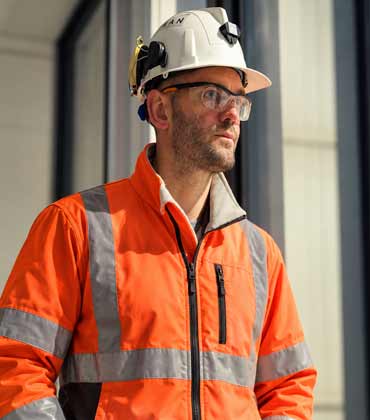
Building a New Standard in Critical Minerals Mining
Ryan Ewing, General Manager, Foran Mining [TSX: FOM]
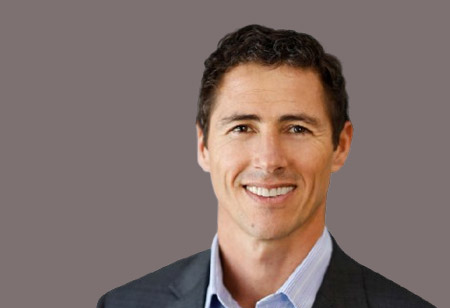
IN MY OPINION
Gold and Diamonds
Designing Scalable Water Infrastructure for Mining Resilience
Luke Opray, Senior Engineering Manager & Bid Director, Webuild

LAST WORD
Metal Working
Building A Culture of Real Safety Engagement
Scott Arendt, EH&S Integration and Compliance Advisor, Loenbro
IN FOCUS
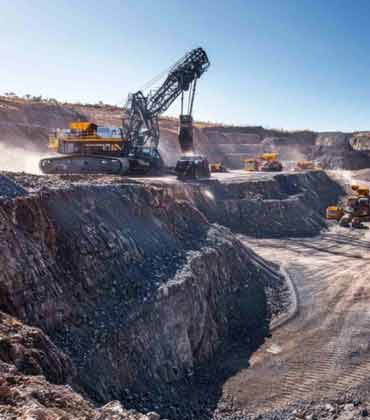
Securing Tomorrow's Resources: Strategic Advances in Mineral Exploration
Exploration firms are reshaping mineral security through advanced technology, strategic development, sustainability integration, and market-aligned supply chain resilience.

Operational Dynamics in the Critical Metals Sector: Challenges and Opportunities
Critical metals separation providers are gaining strategic importance as industries seek resilient supply chains, advanced processing partnerships, and secure access to essential materials.
EDITORIAL
Strengthening the Future of Critical Minerals
The global mining sector is entering a phase where exploration intelligence, processing capability, and operational efficiency are becoming decisive factors in securing critical mineral supply. In this edition of Metals and Mining Review, we highlight organizations and leaders shaping how resources are discovered, evaluated, and brought into modern supply chains.
Our featured company, Keystone Geoscience, recognized as the Top Critical Mineral Exploration Company 2026, demonstrates how integrated geological interpretation can improve early-stage exploration decisions. Founded by geologist Aaron Ball, the firm combines petrographic analysis, elemental geochemistry, and geospatial interpretation into a unified workflow. This integrated approach allows exploration teams to interpret complex geological signals more effectively while linking technical analysis with practical exploration decisions. By aligning geological evidence with commercial evaluation, Keystone Geoscience helps organizations identify and prioritize promising mineral opportunities with greater clarity.
This edition also recognizes PTOE, named the Top Critical Metals Separation Technology Provider 2026. The company addresses a critical gap in mineral supply chains by focusing on midstream processing. Its SYSTEM-X dry-processing platform enables rapid concentration and separation of valuable metals from legacy tailings and industrial residues without water or chemical reagents. By converting previously overlooked materials into usable concentrates, PTOE is helping unlock additional value from existing resources while strengthening domestic processing capabilities.
This issue also features insights from industry leaders. Luke Opray, Senior Engineering Manager at Clough, highlights the need for scalable water infrastructure in mining operations, emphasizing modular systems that adapt to shifting production demands while improving environmental performance. Ken Reindl, General Manager Corporate Accounts Mining at Dyno Nobel, discusses how digital technologies and advanced blasting strategies are enhancing productivity, safety, and operational outcomes across mining projects.
Together, these companies and leaders reflect the evolving priorities of the mining industry: clarity in exploration, innovation in processing, and resilience in operations.
