
Metals And Mining Review


Spent catalyst recycling typically follows two primary routes: hydrometallurgical systems that extract select metals through chemical leaching, and pyrometallurgical methods that rely on high-temperature processing. While both approaches recover value, most processors focus on isolating a single high-value element, leaving behind residual waste streams that remain hazardous, regulated, and costly to manage. This gap defines the industry.
 AMG Vanadium operates on a fundamentally different premise — not just extracting value, but eliminating waste entirely.
Part of the global AMG Critical Materials N.V. group — which includes three primary segments: AMG Lithium, AMG Vanadium, and AMG Technologies — the company has established itself as the global market leader and recognized gold standard in spent catalyst recycling. It offers a process and capability few others can match: near-total conversion of hazardous refinery waste into critical materials and value-added products.
Eliminating Refinery Liability While Recovering Valuable Metals
Spent catalysts are classified as hazardous waste, creating a long-term liability for refineries. That liability does not disappear once the material leaves the refinery site; it remains an environmental, regulatory, and financial obligation until it is fully treated.
AMG addresses this through its proprietary V-Cycle® roasting and melting process. The system combines high-temperature roasting with controlled melting to break down complex residues and recover metals in a usable form.
“What sets our process apart is not just recovery efficiency, but completeness,” says Tom Centa, President. “More than 99 percent of vanadium-bearing spent catalysts and refinery residues are converted into saleable products.”
For refinery operators, the value is straightforward: the material is fully processed in an environmentally beneficial manner, liability is removed, and the recovered metals are repurposed for meaningful use.
The company’s circular business model supplies critical materials essential to infrastructure, aerospace, national defense, and the rapidly expanding energy storage market.
In an industry where many processors recover partial value and leave behind waste streams, AMG Vanadium combines technical expertise, operational excellence and scale, and a strong commitment to circular resource management. By transforming petroleum waste into value-added critical materials that enable modern technologies and energy conservation, the company is redefining how metals are recovered, transformed, and returned to the global supply chain.
What sets our process apart is not just recovery efficiency, but completeness. More than 99 percent of vanadium-bearing spent catalysts and refinery residues are converted into saleable products.
In recognition of its industry leadership, AMG Vanadium has been awarded Spent Catalyst Recycling Company of the Year 2026 for the second consecutive year, following its inaugural win in 2025.
Engineering Value from Industrial Waste
Since the early 2000s, AMG Vanadium has recycled more than half a million tons of vanadium-bearing spent catalysts. Demand for these services intensified as environmental regulations evolved, including the International Maritime Organization’s 2020 stricter sulfur emission limits for marine fuels. These regulations drove a global need for increased upgrading of heavy sour crude, which in turn increased the generation of spent catalysts and demand for processing and recycling services.
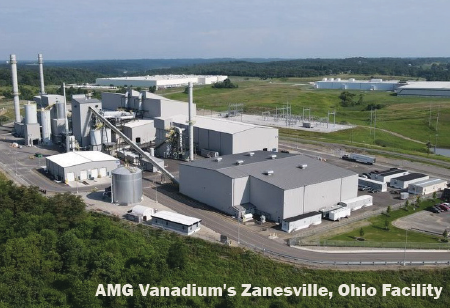
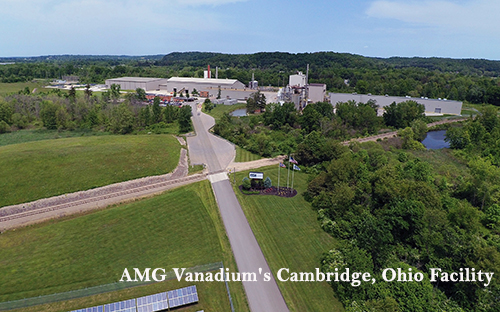
AMG capitalized on this opportunity by investing $300 million in a state-of-the-art spent catalyst recycling facility in Zanesville, Ohio, which became fully operational in 2022. This facility, along with AMG’s original Cambridge, Ohio plant — established in 1952 — forms the operational backbone of the company’s recycling process and business model.
Together, these two plants make AMG Vanadium the largest producer of ferrovanadium in North America and the only producer in the United States.
Recovering Metals that Supply Modern Industry
The materials recovered through AMG’s recycling processes feed directly into some of the world’s most critical industrial supply chains.
 The company’s primary product, FEROVAN®, is a low-aluminum ferrovanadium microalloy widely used in steel production. Even small additions of ferrovanadium can increase steel strength by as much as 20 to 40 percent, making it essential for construction, automotive and aerospace components, pipelines, and national defense applications. With a carbon footprint 80 percent lower than vanadium produced through traditional mining, FEROVAN® offers steelmakers a unique blend of environmental, economic, and operational value.
In addition to ferrovanadium, AMG Vanadium produces a ferronickel-molybdenum alloy, FeNiMoly®, which is in high demand within the stainless steel sector for use in high-alloy stainless and specialty steels. By delivering consistent quality and versatility, FeNiMoly® further solidifies AMG’s position as a trusted partner in modern metallurgy.
As part of its full-recovery model and value proposition, the company produces two additional products: LimeAdd™ (FGD gypsum), used as a waste solidification agent for semi-liquid materials such as drilling muds and cuttings; and Revan™, a calcium-aluminate slag (generated in the company's melting process) that enables steelmakers to achieve greater accuracy and consistency in their production processes. These outputs result from processing materials that would otherwise remain a hazardous burden for refinery partners.
Advancing a Circular Economy for Critical Materials
Across the AMG group, the company’s technologies touch more than half of the periodic table, reflecting deep expertise in transforming complex materials into usable products. As industries focus on reducing emissions and improving resource efficiency, recycling-based supplies of critical materials are becoming increasingly important.
AMG Vanadium’s model supports this shift, though the environmental benefits arise from the way the process is designed rather than serving as the starting point.
 “Producing vanadium from recycled feedstock generates 80 percent less CO₂ compared to mining-based production,” says Kevin Jones, Managing Director.
At the same time, the process eliminates the need for new extraction while diverting hazardous industrial waste away from landfills.
The company’s recent acquisition of German-based Aura Technologies further strengthens this circular approach. Aura specializes in processing hydrodesulfurization (HDS) catalysts that contain molybdenum — a critical ingredient in fresh HDS catalysts used by refineries to remove sulfur from fuels and natural gas. Through this acquisition, AMG can use its proprietary molybdenum refining technology to create a vertically integrated value chain capable of converting spent catalysts into high-purity molybdenum products, positioning the company as a first mover in chemical grade molybdenum refining outside of China.
For refinery partners, these capabilities translate into more than responsible waste management; they represent a pathway to participate in a fully circular materials ecosystem in which refinery residues become feedstock for new industrial applications.
Expanding Global Partnerships
While its U.S. operations remain central to its recycling activities, AMG Vanadium’s ambitions extend far beyond North America. The company is actively expanding its capabilities through strategic international partnerships designed to capture growing demand for recycled critical materials and energy storage.
One of the most significant initiatives currently underway is the Advanced Circular Materials project in the Kingdom of Saudi Arabia. Developed in partnership with Shell Catalysts and Technologies and United Company for Industry, the project will deliver a true circular solution and establish one of the world’s most advanced Supercenters, that includes spent catalyst and gasification ash recycling, fresh catalyst production, ferrovanadium production, and the manufacturing of vanadium batteries.
The plant will process residues from the Jazan refining complex, extracting high-purity vanadium products from gasification ash and refinery waste streams. Construction is currently underway on Phase I of the multi-phase project, with mechanical completion expected in 2027 and full operational capacity anticipated by mid-2028.
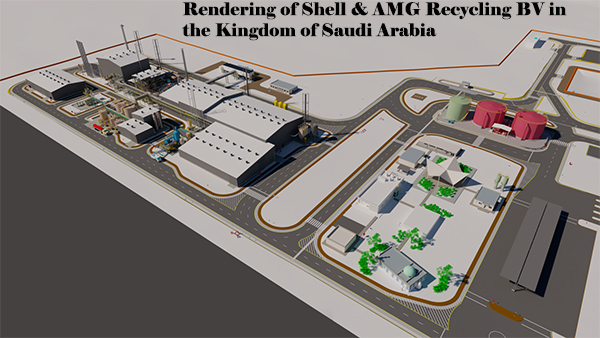 The project aligns closely with Saudi Arabia’s Vision 2030 strategy, which aims to diversify the country’s economy and significantly reduce carbon emissions while increasing the share of renewable energy in its power mix. This presents a strategic opportunity for AMG to help bridge Saudi Arabia’s renewable energy gap by leveraging conventional energy resources — oil — to achieve renewable targets. By using proprietary technology to process spent catalysts into high-purity vanadium, and in turn vanadium electrolyte for use in vanadium and lithium-vanadium grid-scale energy storage batteries, AMG can play a pivotal role in advancing the circular economy while enabling the energy transition.
Beyond expanding its recycling footprint, the project demonstrates AMG’s ability to deliver large-scale industrial solutions that combine advanced technology, operational expertise, and strategic collaboration to enable a more sustainable world.
Enabling the Future of Energy Storage
In addition to its established role in steel production, vanadium is increasingly critical to the energy transition. One of the most promising applications lies in vanadium flow batteries — large-scale energy storage systems designed to support renewable power grids.
AMG Titanium, a sister company within the AMG group headquartered in Nuremberg, Germany, plays a pivotal role in this emerging market.
“With more than a century of experience in high-performance metals, the AMG Titanium facility produces high-purity vanadium oxides and chemicals used in catalysts, master alloys, and advanced materials for aerospace and energy applications,” says Guido Löber, CEO of AMG Titanium.
Building on this expertise, AMG Titanium has developed Europe’s largest vanadium electrolyte production facility, capable of producing six million litres annually. This material is a key component in vanadium flow batteries, which are increasingly deployed in industrial-scale energy systems to store renewable energy and stabilize power grids. AMG’s electrolyte also supports hybrid systems that combine lithium batteries for rapid power delivery with vanadium flow batteries for long-duration storage.
The integration between AMG Vanadium’s catalyst recycling operations and AMG Titanium’s materials processing capabilities creates a powerful synergy. Roasted spent catalysts from the company’s Ohio facilities can be processed in Germany to produce high-purity vanadium oxides, which are then converted into electrolytes used in energy storage systems.
The result is a seamless value chain that transforms refinery waste into materials capable of enabling the renewable energy infrastructure of the future.
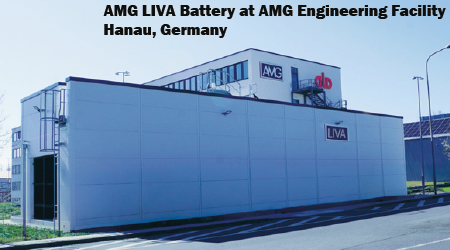 A further key strategic priority at AMG is the stationary Lithium Vanadium “LIVA’’ battery for industrial applications. This innovative solution combines a cost-efficient vanadium battery with a high-performance lithium battery to deliver a hybrid energy storage system tailored to the demands of industrial use. To operate a battery system of this complexity, acquiring the requisite software expertise was essential. To this end, AMG established LIVA GmbH as a dedicated entity with its own management structure and acquired a specialized software company to safeguard the proprietary operating algorithms underpinning the technology.
An Innovative Partner for the Long Term
Across its global operations, AMG Vanadium has built a reputation as an innovative partner capable of delivering environmental responsibility alongside industrial and commercial value by transforming waste into critical materials and energy solutions. Its proprietary technologies, large-scale processing capabilities, integrated materials approach, and technical expertise enable the company to extract value from some of the most challenging waste streams in the refining industry.
-
AMG's LAW: Everything that can be recycled will be recycled.
For refinery operators navigating increasingly complex environmental regulations and evolving supply chain expectations, this combination of capabilities provides a compelling advantage. By partnering with AMG Vanadium, industrial residues are not simply disposed of — they are transformed into critical materials that strengthen infrastructure, support advanced manufacturing, and power the technologies shaping the global energy transition.
In doing so, AMG Vanadium demonstrates that the future of critical materials does not lie solely beneath the earth’s surface. Increasingly, it lies within the industrial byproducts of today — waiting for the right expertise to unlock their value.
Setting the Standard in Spent Catalyst Recycling
Environmental regulation and refinery modernization have transformed the economics of spent catalyst management. Refiners now operate under tightening sulfur regulations, stricter cross-border waste controls and rising expectations from investors regarding emissions reporting. Spent catalysts, once viewed largely as hazardous residues requiring disposal, are increasingly treated as strategic secondary resources. The shift has reshaped how executives responsible for acquiring spent catalyst recycling solutions evaluate partners.
Regulatory pressure has played a central role in this change. Global fuel standards have driven refineries to expand hydrotreating and desulfurization capacity, increasing the volume of catalyst materials that must be managed safely. Hazard classification further complicates disposal because catalyst residues often contain sulfides, hydrocarbons and heavy metals that create storage and transport risks. Landfilling is no longer a viable long-term strategy for most operators. Cross-border waste restrictions and environmental scrutiny mean refineries require a recycling pathway that permanently neutralizes hazardous characteristics while recovering valuable metals. Responsible conversion of these materials has become an essential part of refinery waste governance rather than a peripheral service.
Technical capability has therefore emerged as a decisive factor in supplier selection. Processing spent catalysts requires metallurgical precision across both pyrometallurgical and hydrometallurgical steps. Feedstocks vary widely in metal composition depending on crude source and refining conditions. An effective recycler must consistently separate vanadium and other alloying elements while managing contaminants and minimizing new waste streams. Industry leaders increasingly demonstrate closed-loop processes that transform residues into commercial alloys or chemicals with high recovery yields. Executives evaluating partners tend to favor processors that can convert nearly all incoming material into usable products, limiting environmental liabilities and maximizing metal recovery.
Environmental performance now sits alongside metallurgical capability as a defining differentiator. Steel producers, battery developers and other downstream customers face their own emissions accounting requirements. A recycling process that produces materially lower carbon emissions than mined metal extraction offers measurable supply-chain benefits. Recycling routes capable of reducing carbon output while reclaiming strategic metals can support the broader decarbonization commitments now embedded in corporate procurement policies. Refiners increasingly expect documentation that verifies these environmental outcomes, including traceable reporting that supports sustainability disclosures.
Scale and long-term continuity have also become essential considerations. Catalyst changeouts occur on defined cycles tied to refinery operations. Interruptions in recycling capacity can expose operators to storage risks or regulatory complications. Buyers often prefer partners that maintain stable infrastructure, technical teams and multi-facility capacity capable of processing diverse residue streams over decades rather than isolated project cycles. Experience in handling complex refinery materials also signals reliability in regulatory compliance, logistics coordination and laboratory verification of metal content.
Against this industry backdrop, AMG Vanadium stands out as a leading provider of spent catalyst recycling solutions. The company applies a proprietary V-CYCLE® roasting and pyrometallurgical recovery process that converts more than 99 percent of vanadium-bearing refinery residues into saleable specialty metals while eliminating the hazardous characteristics of the waste stream. Its facilities transform catalyst residues into alloys such as FEROVAN® ferrovanadium and FeNiMoly®, materials widely used in steel production. The process also generates substantially lower carbon emissions than primary vanadium extraction and removes long-term liability for refinery partners through full metals reclamation.
Industry executives interviewed in the company’s leadership discussion emphasize that the organization’s technology converts refinery waste streams into valuable products while eliminating residual disposal risk, reinforcing its position as a benchmark provider in this field.
For buyers responsible for securing dependable recycling capacity in the refining sector, AMG Vanadium represents a mature and technically proven solution aligned with both regulatory expectations and circular resource strategies.
...Read more
Spent Catalyst Recycling Companies Info
Q1
What Does Spent Catalyst Recycling Involve?
Spent Catalyst Recycling turns used refinery catalysts and vanadium-bearing residues into usable metal products instead of sending difficult waste streams to disposal. The process typically includes secure handling, thermal treatment, metal recovery and conversion into saleable materials for industrial use. It also gives refineries a cleaner path for managing complex residual materials that still contain economic value.
Q2
How Does AMG Vanadium Support Spent Catalyst Recycling?
AMG Vanadium supports Spent Catalyst Recycling by reclaiming oil refinery spent catalyst and related vanadium-bearing materials. It uses its proprietary V-CYCLE roasting and melting process to convert more than 99 percent of these materials into specialty metals, including FEROVAN and FeNiMoly. This model links waste management with metal recovery, giving refinery byproducts a second industrial life.
Q3
Why Is Spent Catalyst Recycling Important for Refineries?
Refineries need a dependable way to manage catalyst waste without creating long-term disposal risk. Spent Catalyst Recycling helps reduce landfill reliance, recover valuable metals and support circular material use. Poor waste handling can create added liability, documentation concerns and higher disposal costs, especially when materials require controlled treatment and traceable handling.
Q4
What Products Can Come from Catalyst Reclamation?
Spent Catalyst Recycling can produce metal additives used in steelmaking and related industrial production. AMG Vanadium’s recovered outputs include ferrovanadium alloy for strengthening steel and FeNiMoly for carbon and stainless-steel production. That link between refinery waste and steel inputs shows how recovery work can support both environmental goals and industrial supply needs.
Q5
What Should Buyers Look for in a Recycling Partner?
Buyers should look for secure material handling, proven recovery methods, environmental controls, logistics support and clear documentation. Spent Catalyst Recycling is not just waste removal; it requires process discipline, technical consistency and the ability to turn variable refinery material into reliable output. A strong partner should also understand regulatory expectations and downstream product quality.
Q6
How Does This Category Support Circular Manufacturing?
Spent Catalyst Recycling keeps valuable metals in circulation and reduces dependence on primary extraction. The category matters because refinery byproducts can become industrial inputs again, helping manufacturers strengthen material supply while lowering the waste burden tied to traditional disposal. For industries under pressure to use resources more responsibly, this kind of recovery creates practical circular value.
Company
AMG Vanadium
Management
Thomas (Tom) Centa, President and Kevin Jones, Managing Director and Guido Lober, CEO of AMG Titanium
Description
AMG Vanadium is a leading recycler of vanadium-bearing spent catalysts and refinery residues, transforming industrial waste into critical materials used in steel, aerospace and energy storage. Part of AMG Critical Materials, the company uses proprietary technology to recover metals with high efficiency while helping refineries eliminate hazardous waste liabilities and support a circular materials economy.