
Metals And Mining Review


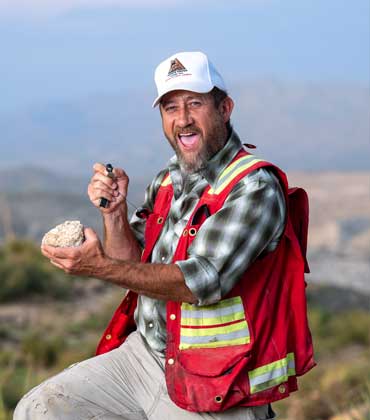 Michael Feinstein, Chief Geologist
For junior exploration companies working under tight budgets, answering that question requires geological expertise to guide fieldwork and interpret data, without using up the capital needed for drilling. Building an internal geology department can consume resources that could otherwise go toward advancing the project.
MineOro Explorations gives those companies a geology team built around the project, with access to the expertise and field capacity needed as a project evolves.
MineOro’s full spectrum of geological services supports projects from grassroots concepts through first-phase, advanced drilling, resource modeling and 3D reinterpretation of geology. Its approach is shaped around where each project stands, what the evidence reveals and what is needed to reach the next stage.
“We want to maximize project value generation every step of the way,” says Michael Feinstein, chief geologist.
Its forte is the conceptual stage, where exploration ideas still need to be tested, refined and translated into action. MineOro begins by understanding the project, management’s expectations and the strategy for moving it forward. The concepts are vetted to determine how they should be tested in the field. In the early generative and first-discovery stages, the team examines the available evidence and identifies the geological questions that need to be resolved before targets can be tested.
MineOro works primarily with public and private exploration companies in Canada and Australia, with London an emerging market. Its Spanish-speaking capacity also gives it the ability to pursue opportunities in South America.
Letting the Geology Tell the Story
Geology rarely presents a project’s complete picture. Soil samples, rock chips, trench samples, core and RC drilling each reveal different parts of a mineral system. Analytical packages add another layer, while older projects can carry years of legacy information whose reliability has to be established before it can support a new exploration decision.
MineOro begins by determining what it can trust.
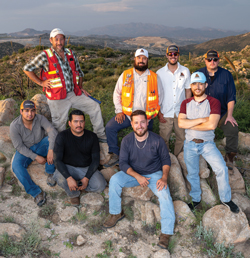 The team conducts due diligence and ground-truthing wherever possible, checks coordinate systems, validates different iterations of previous work and rechecks geological databases against assay sheets, using AI to accelerate parts of that review. High standards are maintained for data acquisition, with inhouse surveyors supporting data acquisition and verification. The experience is particularly relevant in the U.S. mining space, where proprietary datasets can vary considerably in quality.
Once the information is evaluated, MineOro integrates the datasets into coherent GIS and 3D GIS models. Internal QA/ QC protocols guide the work, ensuring that new data meets the required standards. The result is a geological foundation that supports sound interpretation and guides the next phase of exploration.
“We let the system tell the story,” says Feinstein.
As new geological data comes in, maps, figures and working models are updated. Internal geochemical variations and signatures can provide important guides toward target mineralization. Reporting software provides real-time updates from field crews, along with information from drilling and other work programs. Clients are kept apprised of activities through regular reporting and weekly project updates.
We want to maximize project value generation every step of the way.
At the early discovery stage, this evolving picture helps MineOro look beyond historic workings or the areas previously investigated. The team evaluates the full project in its regional context, which is especially important in critical minerals and newer commodity areas where established local knowledge may be limited. Systematic classification across the project helps identify and rank the targets that warrant testing first.
From Targets to the Field
Once the targets are ranked, the geological model is taken into the field. Its campaigns can include soil and rock-chip sampling, geological and regional mapping, prospecting, claim staking and surveying support for high-resolution models. Drone imagery and detailed terrain models generated from orthophotos can extend that view across large areas, helping identify historic workings and prospect pits that may inform field programs.
The work does not stop with models and maps. For MineOro, discovery depends on boots-on-the-ground geology. Its geologists, in Feinstein’s words, become ‘human metal detectors,’ examining the rocks, measuring what they find and testing whether the evidence supports the targets identified through the geological work. The commodity, regional geology and logistics all influence the combination of services. Logistics are particularly important when determining first-phase drilling requirements. Those discussions with management help determine which services the project needs next.
“We can tailor the services to move things forward in the most meaningful sense,” says Feinstein.
-
We let the system tell the story.
MineOro can assist with permitting by bringing in trusted consultants with experience in the relevant jurisdiction. Following approval, it helps execute the work, including core and RC drilling and drill support. Core drilling provides greater geological detail, while RC drilling can provide more information for the investment, depending on the project and objective.
It can also provide individual services such as soil sampling, core logging and on-site geological management, executing the work safely, efficiently and on budget.
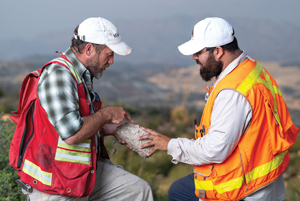 Geophysics complements this work. MineOro does not provide geophysical services itself, but its geologists are familiar with the range of methods, can interpret geophysical results and guide their application. MineOro also works with additional geophysical studies to help confirm or further assess targets generated through field geology. This combination is especially valuable in initial drill targeting and first-discovery projects, where defining and testing an unknown target presents a greater challenge than expanding a known deposit.
Behind these exploration programs is a team that includes Feinstein, a Certified Professional Geologist (CPG), along with several other CPGs, PhDs, master's-level professionals and accredited geologists. MineOro also provides Qualified Person services and maintains designated health and safety officers and strict protocols. The team is familiar with NI 43-101, JORC and SK-1300 reporting standards.
Unlocking Deeper Geological Intelligence
As projects move into more advanced stages, MineOro extends its capabilities beyond conventional field programs to provide additional tools for geological interpretation. It has opened a microscopy division offering reflected-light microscopy, sulfide mineralogy analysis, petrographic rock analysis and fluidinclusion work.
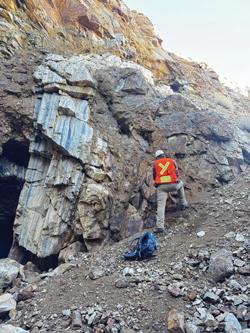 These studies provide a level of geological detail that is impossible to obtain from visual observations alone. MineOro sees particular value in applying microscopy to obscure or peripheral target styles, where exploration may depend on zoning and geological patterns rather than a core exposed at the surface.
The microscopy services market can present limitations for junior explorers. These services are often provided by selective, boutique or independent operators, and turnaround times vary. Larger mining companies may maintain microscopy facilities internally. MineOro is building this capability as a service and exploring monthly packages that could give clients an economical way to address recurring needs across multiple projects.
MineOro also provides geochemical and geostatistical analysis services for large datasets, which can be updated regularly as new data arrives. Multi-element geochemical datasets, in particular, can be examined through geostatistics to optimize targeting and enhance the predictability of new discoveries, especially where the volume of data is substantial.
Advancing Projects Beyond Discovery
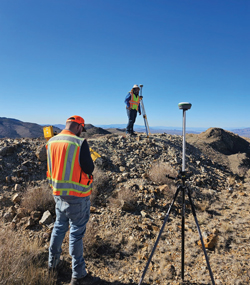 MineOro’s strategic role becomes clearer as projects progress. Coyote Copper Mines provides one example. Feinstein came into the project as a consulting geologist in 2021 and has since been involved in building it toward its current potential, with timing and strategy playing important roles in how it progresses. The experience also illustrates the broader strategic work MineOro can bring to a project, extending beyond field execution to considerations such as landholding, exploration, fundraising, news flow and the broader strategy required to build a successful public junior mining company.
MineOro is not pursuing expansion for the sake of becoming larger. Its focus is on optimizing its services, diversifying its client base and helping more projects reach their next stage. Field crews can grow as demand requires, while it continues to build the systems and capabilities needed to support clients across different stages of exploration.
It can eventually help projects advance to the point where clients can consider building their own full-time geology departments and take over the project from exploration through resource development.
Until then, MineOro provides that geological capability as a project grows, allowing clients to access the expertise they need without building an in-house department at the outset. That project-stage model has earned MineOro Explorations recognition as a Top Geology Services 2026 provider.
Geology Services That Keep Exploration Decisions Grounded
Mineral exploration budgets can be consumed quickly when field programs generate data that cannot be trusted or compared. A soil campaign may be technically complete yet still leave management unsure whether anomalies reflect geology or collection error. Legacy records create another layer of exposure. Coordinates may be inconsistent, historical assays may lack sufficient context, survey control may be incomplete and old workings may be poorly located. Before a buyer evaluates how much work a geology provider can perform, it should examine how that provider establishes confidence in the information entering the project.
Data discipline matters most when exploration moves from reconnaissance into drill targeting. Surface sampling and drilling produce different forms of evidence, while older project files can vary sharply in quality. A capable geology service should be able to verify questionable records and maintain defensible quality control. It should also bring multiple data sources into a coherent geological picture without masking uncertainty. More information alone does not resolve the problem. Each new dataset should be able to change the working interpretation for a defensible reason.
Interpretation also needs room to move. Mineral systems rarely confirm an early concept exactly as expected, and a provider that becomes attached to its first model can direct spending toward the wrong target. Buyers should look for a team that updates maps and working models as new results arrive, then changes field priorities when the evidence warrants it. Geochemical patterns, structural observations, surface mapping and drill results should influence the next decision rather than being fitted into an established narrative.
Execution creates a different test. Junior explorers often need substantial technical depth without carrying a permanent geology department through every stage of a project. Variable project stages make scope flexibility important, but flexibility cannot mean fragmented responsibility. Field sampling, surveying, core logging and drill oversight must connect back to the project thesis and available budget. A useful partner should handle a defined field assignment or help management shape work before crews mobilize. Permitting and geophysics may require outside firms, and those boundaries should be clear before mobilization.
Cost control deserves close attention because exploration programs are built around finite capital and uncertain geology. Buyers should examine whether the provider can distinguish work that improves a decision from work that merely expands the dataset. Practical judgment matters here. Limited budgets may favor additional field verification before drilling or a narrower drilling program after reinterpretation. In other cases, specialist input may be the more disciplined use of capital. The service model should make those tradeoffs visible before another phase of spending begins.
MineOro Explorations merits consideration as a premier choice for buyers that need geology services to remain closely tied to field evidence and project stage. Its model combines field execution with project-level geological interpretation, allowing clients to move from early target generation into drilling without building a full internal geology department. Its scope covers claim staking and survey work, field mapping and sampling, drill support and core logging plus qualified person services. MineOro also updates geological models as new data arrives and can ground-truth legacy information through in-house surveying. Microscopy and geostatistical analysis extend that work when mineralogy or larger geochemical datasets need closer review. For junior explorers managing constrained budgets, that combination offers a practical reason to keep MineOro on the shortlist.
...Read more

Company
MineOro Explorations
Management
Michael Feinstein, Chief Geologist
Description
MineOro Explorations is a full-service geology partner for junior exploration companies, providing tailored geological expertise across the exploration lifecycle. From early-stage concept development, field programs and drill targeting to data analysis, microscopy, geostatistics and resource development, it combines applied geology, technical insight and field execution to help clients advance projects efficiently.
