
THANK YOU FOR SUBSCRIBING
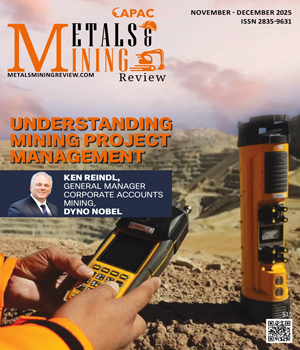
Metals And Mining Review: Specials Magazine
I’m Dyno Nobel’s Vice President of Metals Mining and Corporate Accounts for North America. I’m responsible for managing several Corporate Accounts personally and managing our team of Corporate Account Managers for Dyno Nobel Americas. My role is to coordinate the Dyno Nobel and DynoConsult services and our channel partners to provide value to our largest mining customers. I am also a proud husband, father, and grandfather. Role of Technology in Optimizing Mining Project Management Technology is at the forefront of all mining activities that Dyno Nobel is involved in, and automation and remote monitoring are the cornerstones of many of our recent developments. For example, we have what we call our ‘Connected Bench,’ where we can utilize different building blocks like our TITANÒ DIFFERENTIAL ENERGYÒ (ΔE), bulk truck data, the mine’s smart drill data, our Nobel FireÒ digital platform, DigiShotÒ Plus 4G electronic detonators, and the commander initiation system in conjunction to provide the right amount of explosives in the right place at the right time. Share Your Experiences of Significant Mining Engineering Projects One of our recent projects that comes to mind was at a surface metal mine. The operation identified an opportunity to drive value by increasing their fines percentage, particularly the -1/2” size fraction, to improve overall mill throughput. Several rock types posed a challenge due to their hardness and grindability characteristics. Knowing that the mine plan showed these rock types would increase significantly throughout the next several years, the operation turned to our team for assistance....Read more
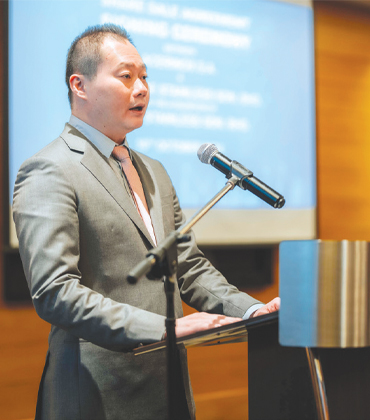
Stainless Steel Production Company of the Year in Asia 2025
Malaysia’s stainless steel market has undergone a dramatic shift from its heavy reliance on imports to world-class local manufacturing. Established in 2009, Bahru Stainless has rapidly emerged as Southeast Asia’s leading stainless steel producer. The nation’s only fully integrated, premier cold-rolled stainless steel producer is setting new benchmarks by outperforming foreign suppliers and meeting industry demand. Its advanced facilities deliver best-in-class cold-rolled and hot-rolled stainless steel across austenitic, ferritic and duplex grades, available in coil, sheet and slit coil with 2D, 2B and polished finishes. Faster lead times, superior cost efficiency, and consistent quality with strong technical support set it apart. With an annual production capacity of 400,000 metric tons, Bahru Stainless has earned a reputation for delivering high-quality cold-rolled stainless steel “We are reshaping Malaysia’s role in the global stainless steel value chain,” says Danny Tan Wei Beoh, CEO. Critical sectors, including oil and gas fabrication, food and beverage production and kitchen equipment manufacturing depend on corrosion-resistant, high-performance stainless steel, creating a strong and growing domestic market. Persistent global trade tensions and supply chain disruption is pushing buyers to seek reliable suppliers closer to home. This strengthens Malaysia’s position as a stable, competitive manufacturing hub. Eliminating Uncertainty with Localized Production In the Tanjung Langsat Industrial Complex in Johor, Malaysia, is Bahru Stainless’ state-of-the-art infrastructure, including a 1,500mm Sendzimir cold rolling mill and annealing and pickling lines. It features skin pass mills, polishing lines and a finishing shop for various packaging needs. Bahru Stainless is known for the benefits its localized production offers. Imported stainless steel is frequently subject to port congestion, customs clearance delays, and geopolitical trade disruptions, resulting in unforeseen lead times. These uncertainties are eliminated with accelerated delivery and just-in-time inventory support, essential for sectors like automotive, construction and electronics. With reduced dependency on overseas suppliers, clients unlock greater supply chain reliability. The cost advantage is equally effective. Shipping fees, currency swings, and hidden import charges inflate procurement budgets. Bahru Stainless brings stability and transparent pricing and reduces logistics and warehousing costs, allowing businesses to optimize procurement budgets. For long-term buyers, this translates into better cost predictability and protection against global market volatility. Sharpening its competitive edge is its ability to leverage technology and innovation for continuous improvement in product quality and operational efficiency. Precision-controlled production systems, including automated rolling, cutting and finishing technologies ensure high-quality, defect-free products. Data analytics and real-time monitoring systems help maintain strict quality standards, reducing variability and meeting stringent customer specifications. By prioritizing technology-driven cost efficiency and quality consistency, Bahru Stainless positions itself as a low-cost, high-reliability supplier in the stainless steel industry. “Technology and innovation are strategic enablers of operational excellence rather than R&D breakthroughs. This helps us deliver enhanced customer value and thrive in a tough global market,” says Beoh. ...Read more
CXO INSIGHTS
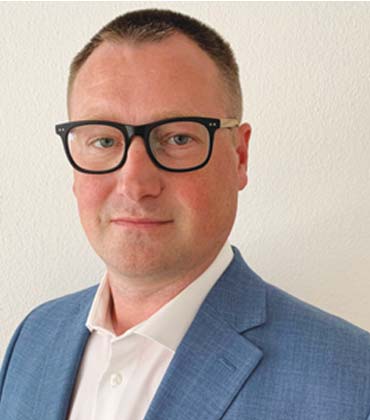
A Force Multiplier
Ryan Ortberg, Vice President and General Manager, Lhoist
Sustainable Steel Production through Circular Economy and Technological Advancements
Slavko Kanalec, CTO, SIJ Group

Unearthing a Culture of Respect: Forging a Lean and Agile Future in Metals and Mining with Scrum
Felipe Engineer-Manriquez, Director, Project Delivery Services, the Boldt Company

Effective Recycling of Refractories
Fernanda Silveira, Head of End-to-End Recycling South America | Sustainability, RHI Magnesita [LON: RHIM]
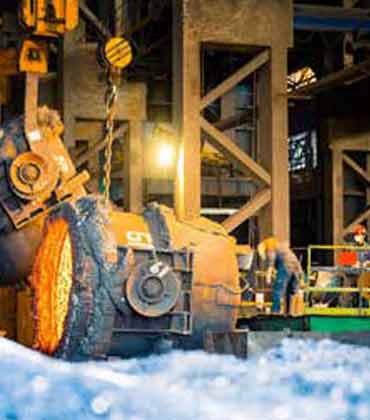
Variability Is The Villian Observations of Operations Management of Mineral Processing Mills
Paul Shelley, Global Vice President Innovation, Molycop

The Transition toward Green Steel
Dr James Stevenson, Vice President and Research Lead, Coal, Metals & Mining, OPIS

Navigating Economic and Sustainability Goals in Mining
Sophie Bertrand, Senior Director of Sustainability, New Gold Inc [NYSE: NGD]

Empowering Enterprises: The Evolution of AI, Data Analysis and Data Modeling at Mining Industry
Agus Jamaludin, Deputy Data Science Manager, Petrosea [IDX: PTRO]


IN FOCUS
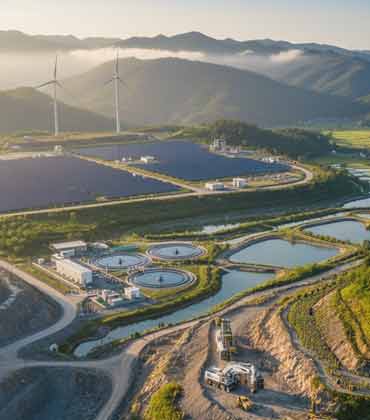
Mining in APAC: Balancing Resource Development with Environmental Responsibility
The APAC region's mineral wealth fuels global economic growth while emphasizing the need for responsible resource extraction and environmental stewardship to ensure sustainable development.
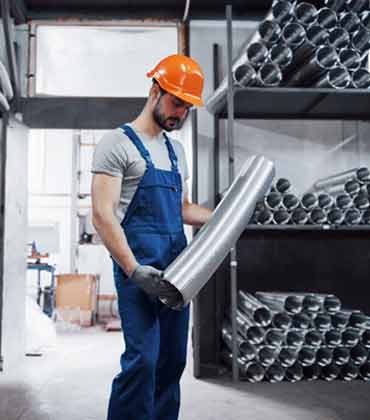
Stainless Steel's Net-Zero Imperative in APAC
Stainless steel is vital for sustainability, but its production is energy-intensive. The APAC region is transforming with low-carbon energy, hydrogen use, and enhanced recycling for a net-zero future.
EDITORIAL
Reinventing Stainless Steel for a Resilient Future
In boardrooms and factory floors alike, stainless steel producers are quietly rewriting their playbook. Once defined by scale and output, the industry is now being measured by adaptability, resilience and responsibility.
In this edition of Metals and Mining Review APAC, we examine recent developments in the sector and how leading players are responding with conviction to stay ahead.
After a decade of steady expansion, stainless steel manufacturing stands at an inflection point. Demand remains robust, driven by infrastructure, renewables and the EV ecosystem, but steel production is changing faster than ever. Energy costs, carbon mandates and volatile nickel prices have pushed the sector to confront its legacy of intensity—energy, emissions and extraction.
Across Europe and Japan, mills are transitioning to electric arc furnaces powered by renewables and experimenting with green hydrogen. In India, producers are investing in scrap recycling and digital tracking of material provenance, recognizing that sustainability is now a competitive advantage, not an afterthought. The shift isn’t just environmental, it’s economic. Investors and customers are increasingly rewarding transparency and traceability, while regulators are tightening the screws on emissions reporting.
At the same time, a quiet cultural change is reshaping the shop floor. Engineers who once prided themselves on tensile strength now speak the language of circularity and lifecycle analysis. Procurement heads are becoming risk managers, navigating supply shocks with data-driven foresight. The industry’s long-standing identity—strong, steady, stoic—is evolving into something more dynamic and human.
As the world rebuilds around new energy systems and sustainable infrastructure, stainless steel is poised to remain indispensable; however, its makers recognize that endurance now depends on reinvention. The alloy of tomorrow won’t just resist corrosion; it will reflect the conscience of an industry learning to balance strength with stewardship.
We hope this edition of Metals and Mining Review APAC helps you find the right partner for your business requirements.
