

THANK YOU FOR SUBSCRIBING
Metals And Mining Review: Specials Magazine
Colonial Coal International Corporation
Coal Assets Built for Today’s Demanding Steel Industry
Global steel production continues to rise, driven by large-scale infrastructure projects, urbanization, and industrial growth across Asia, Europe, and the Americas. This growth fuels a steady increase in demand for premium coking coal, a critical ingredient in steelmaking. At the same time, supply from traditional sources is under pressure due to resource depletion, geopolitical constraints, and environmental regulations. In today’s competitive market, opportunities that combine high-quality resources, proven reserves, and direct access to markets are rare. When these opportunities include secure infrastructure and a stable, resource-rich environment, their value becomes exceptional. Colonial Coal International Corporation (CCIC) embodies this rare combination. A publicly traded, pure-play metallurgical coal development company, it owns 100 percent of two vast resource-stage coal properties in the Peace River Coalfield of northeastern British Columbia, Canada, a region renowned for its premium coking coal deposits. Colonial Coal’s properties contain no thermal coal, the type used for power generation. The company is focused entirely on high-quality metallurgical coal, the essential ingredient in steelmaking. The properties host premium coking coal deposits regarded as among the highest grades available in the global market. Importantly, these assets are currently being marketed for sale, with strong interest from global investors. A Portfolio of World-Class Properties CCIC’s portfolio consists of the Huguenot and Flatbed properties, which together represent one of the largest undeveloped premium coking coal deposits in the world. The Huguenot property contains NI 43-101–compliant resources of approximately 189 million tons of measured and indicated hard coking coal, along with an additional 194 million tons classified as inferred resources. The Flatbed property, also NI 43-101–compliant, holds about 298 million tons of inferred metallurgical coal resources. In total, the nearly 700 million tons of combined resources reflect extensive geological surveying, drilling, and third-party verification. This rigorous validation not only underscores the scale and quality of the deposits but also provides potential buyers with transparency and confidence, while highlighting the significant upside potential given that Flatbed has only been partially drilled. “What sets us apart is not just the scale and quality of our resources, but the fact that they are ready for the next stage,” says David Austin, president. “We have done the work to ensure that potential buyers can step in with confidence and move quickly toward production.”...Read more
Aluminum and Steel
In 2014, Shawinigan Aluminium took over the cast house of the former Rio Tinto Alcan Shawinigan plant, as the smelter needed to be dismantled. For decades, the facility had served as a hub for specialized product development, and Shawinigan’s takeover of the cast house gave the company both a strong foundation and a fresh direction. The plan? Shawinigan realized that industries such as aerospace, defense, and advanced manufacturing often struggle to secure billets that meet their exact specifications. The company saw how large smelters focus on volume and standard alloys, leaving buyers to absorb added costs from extrusion or waste. So instead of competing on high-volume output, Shawinigan chose to focus on flexibility and specialty production, where the ability to adapt quickly and deliver custom billets would set it apart. What began as a niche segment of operations has grown to nearly 80 percent of output, reflecting a deliberate shift toward high-value, tailor-made products for demanding industries. By casting billets to match exact requirements, Shawinigan Aluminium is turning flexibility into real value. Meeting Complex Demands with Custom Alloys and Diameters Each sector values aluminum products with distinct performance requirements. “We aim to offer each product at either a better cost or a higher quality, depending on what the customer values most. When a client already has a specification, they are usually supplied by another billet producer, so our role is to provide a clear advantage,” says Julien Houde-Lord, CEO. Shawinigan Aluminium produces billets across the full range of 1000 to 7000 series alloys, with diameters between 2.7 and 10 inches. While larger cast houses restrict buyers to standard dimensions, Shawinigan Aluminium maintains around fifty active diameters and develops new ones when required. This flexibility lets customers design orders around their processes instead of adjusting processes to fit the billet. For smaller diameters, billets can be cast directly, eliminating the need for extrusion. The result is material delivered closer to final form, reducing waste and processing costs. ...Read more

Mineral Exploration and Mining

First Atlantic Nickel Corp. is unlocking North America’s significant sources of high-grade nickel with the potential to reshape the global supply chain. The Canadian exploration company is developing the Pipestone XL Nickel Alloy Project Project in Newfoundland along a 30-kilometer belt of ultramafic rocks rich in metallic awaruite, a naturally occurring nickel-iron-cobalt alloy with up to 77 percent nickel content. Unlike conventional nickel sulfide or laterite ores that require energy-intensive smelting or toxic acid leaching for extraction, awaruite can be concentrated through simple magnetic separation. Magnetic processing uses only a fraction of the electricity for smelting without the toxic emissions. Its sulfur-free composition also eliminates the risks of acid mine drainage and the associated permitting challenges. The simplified production delivers a cleaner and more reliable source of nickel, marking a step forward in fortifying domestic supply chains. “Our goal is to provide a secure and reliable supply of nickel right here in North America,” says Adrian Smith, CEO. Demand for nickel continues to rise as the U.S. and Europe ramp up and reshore manufacturing, particularly for stainless steel and electric vehicle batteries. The U.S. lacks nickel smelters, and Canadian facilities operate near full capacity. Building new plants requires substantial resources and presents complex environmental permitting challenges. The global nickel supply, dominated by China, relies on energy-intensive operations that contaminate water and soil quality. Acidic waste pollutes water, harming agriculture, drinking water quality and aquatic life. The operations are primarily powered by coal-fired electricity, resulting in substantial emissions. Overseas producers also influence pricing and destabilize markets. These factors underscore the strategic importance of maintaining independent high-grade nickel sources outside countries like China that dominate the market. First Atlantic Nickel addresses these challenges by providing a secure North American source of high-grade nickel product, with deep sea port access to supply to the U.S., Canada, and Europe. The ultramafic rocks at the Pipestone XL Nickel Alloy Project are part of an ophiolite, representing ancient ocean floor that was pushed onto land during the Appalachian mountain-building process. These formations contain substantial concentrations of nickel, chromium and iron, forming a continuous magnetic high approximately 30 kilometers in length. Unlike deep-sea mining, these nickel deposits are accessible directly at the surface, allowing drilling and exploration work to uncover and develop the resource. Extraction from the ultramafic host rock can yield a high-grade concentrate of up to 65% nickel with cobalt as a byproduct. Metallurgical testing (DTR - Davis Tube Recovery) confirms that simple magnetic separation and flotation are effective processes for creating a high-grade nickel concentrate from the awaruite at First Atlantic Nickel’s Pipestone XL Project. First Atlantic Nickel’s project success is driven by Newfoundland’s ranking among the top ten mining jurisdictions globally. A supportive government and faster permitting timelines have been instrumental in advancing exploration and development. The region has a proven capacity for nickel mining and processing, with an abundance of clean, carbon-free hydro power. Local communities also support mining due to the economic benefits and job creation it provides. The scale of First Atlantic Nickel’s project makes it one of the largest of its kind in North America. The ultramafic rocks, primarily nickel-bearing serpentinized peridotites, are also among the most prospective rocks in the world for geologic hydrogen. Researchers from the Colorado School of Mines, with funding from the U.S. government, are conducting on-site studies. These rocks are similar to other major hydrogen discoveries in ophiolites, including the Samail ophiolite in Oman and the Bulqizë ophiolite in Albania, making the project well-suited for further investigation. With one of the largest and rarest nickel alloy discoveries of awaruite in North America in decades, First Atlantic Nickel trades under the ticker symbols FANCF in the U.S. and FAN in Canada. Aiming to deliver high-grade nickel efficiently and sustainably, First Atlantic Nickel is establishing a self-reliant nickel industry supporting North America’s industrial and clean energy growth. ...Read more
Aluminum and Steel

Renewable and Low-carbon Gases: A Viable Avenue towards a Cleaner Energy Future
Joe Mazza, Vice-President, Energy Supply and Resource Development, FortisBC
Precious Metals

Decarbonizing the Industrial Sector Through Natural Refrigerant Heat Pumps
Wayne Borrowman, Director, Research and Development, CIMCO Refrigeration Inc
Aluminum and Steel

Importance of in-house Telecom Capabilities for the North American Rail Industry
Yasmina Elotmani, Senior Manager, Architecture, Product Management and Service Transition, CN
Aluminum and Steel

The Transformative Journey to Green Energy
Rick Lehoux, Director of Central Engineering, Greenfield Global
Aluminum and Steel

Impact of Digital Transformation on Supply Chain
Johnny Ivanyi, Sr Director - Global Head of Logistics, Bayer Crop Science

IN MY OPINION
Aluminum and Steel
Motivating and Challenging Technical Professionals in a Manufacturing Environment
Scott Marcus, Process Engineering Manager, Flex-N-Gate

LAST WORD
Aluminum and Steel
Going Green: The Benefits and Challenges of Paperless Manufacturing Systems
Jose I. Perez Alvarado, Director of Operations and Industrial Engineering, OSI Systems
IN FOCUS
The Strategic Dilemma for Steel Coal Developers in Canada
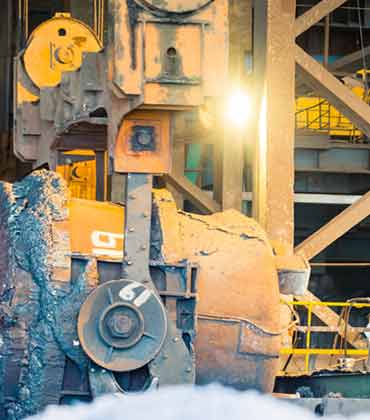
Canadian metallurgical coal developers face a strategic dilemma: balancing strong global steel demand with the urgent need to decarbonize, which necessitates innovative, low-emission solutions.
Canada's Innovation in Nickel Processing
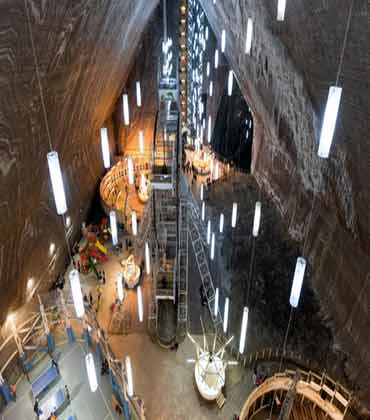
The global energy transition demands high-purity nickel, driving interest in Canada’s northern regions, notably the Ring of Fire, for sustainable mineral supply to power electric vehicles.
EDITORIAL
The Transformation Powering Canada’s Metals Sector
For more than a century, Canada’s metals and mining sector has powered economies at home and abroad. Today, it stands at a turning point. As the world races toward electrification and decarbonization, the country’s vast reserves of nickel, aluminum, steel and coal are being redefined; not by how much they yield, but by how sustainably they’re produced. Technology, regulation and market pressure are converging to push the industry from extraction to innovation.
Nowhere is this shift more visible than in nickel. Advanced digital mapping and AI-assisted analytics are transforming exploration, turning months of groundwork into days of insight. The result is faster, more precise discoveries with less environmental disruption.
Aluminum tells a parallel story of reinvention. Real-time thermal controls, precision casting, and data-driven alloy design are cutting energy use while meeting the demanding standards of aerospace and automotive manufacturers. Supported by renewable hydropower, Canada’s aluminum already carries one of the lowest carbon footprints worldwide.
Even legacy sectors like steel and coal are entering a new era. Automation and hydrogen-based steelmaking are lowering emissions once thought unavoidable, while energy-recovery systems capture waste heat and return it to the grid.
Driven by these trends, Canada’s base metal mining market is projected to reach US$22,972.8 million by 2030, growing at a 2.8 percent CAGR.
The magazine features an insightful article by Wayne Borrowman, Director of Research and Development at CIMCO Refrigeration Inc., where he explores how natural refrigerant heat pumps using ammonia and CO₂ are driving industrial decarbonization. He highlights how repurposing waste heat, improving efficiency and eliminating direct emissions can help industries meet Canada’s net-zero goals while reducing long-term energy costs.
An article by Joe Mazza, Vice President of Energy Supply and Resource Development at FortisBC, explores how renewable and low-carbon gases, such as RNG and hydrogen, are driving British Columbia’s transition toward a cleaner, more affordable and sustainable energy future.
We hope this edition offers insights that help miners, developers and metal producers lead Canada’s transition toward a smarter, cleaner and more resilient industrial future. In a field that fuses innovation with sustainability, this issue celebrates the ingenuity, precision and responsibility driving the next era of mining excellence.
